ROTATE YOUR MATTRESS LIKE A PRO — Here’s How (With Visuals You Can’t Ignore!)
list Quick Navigation
Have you ever woken up feeling like you spent the night wrestling a wild animal, only to realize your bed resembles a topographical map of a valley? You are certainly not alone. According to sleep science research from the National Sleep Foundation, rotating your mattress every 30 days reduces pressure point formation by a staggering 47%. Despite this compelling statistic, mattress maintenance is one of the most overlooked aspects of household upkeep.
We invest hundreds, sometimes thousands, of dollars into finding the perfect mattress—meticulously researching foam densities, coil counts, and cooling technologies. Yet, once it arrives and we cover it in our favorite sheets, we tend to forget about it. Over time, that neglect translates into poor sleep, aching joints, and a prematurely ruined investment.
This comprehensive guide will walk you through exactly why, when, and how to rotate your mattress like a seasoned pro. It is time to reclaim your sleep quality and protect your investment.
Why Rotating Your Mattress Isn’t Just a "Nice-to-Have"
Most people skip mattress rotation because they are not sure how to do it properly, or they mistakenly believe it is an outdated practice meant only for old-school innerspring beds. But here is the hard truth: neglecting rotation leads to uneven wear, compromised spinal alignment, and even localized skin irritation due to trapped heat in compressed areas.
Every night, your mattress bears the brunt of your body weight. Naturally, the heaviest parts of the human body—the hips, torso, and shoulders—compress the materials beneath them far more than your head or feet do. If you sleep in the exact same spot, in the exact same position, night after night, the materials in that specific zone begin to fatigue.
In fact, a pivotal 2021 ergonomic study found that 68% of unrotated mattresses developed visible wear patterns, known as "sleep impressions," within just six months of regular use. This is not just an aesthetic issue; it is a biomechanical nightmare. When your mattress sags in the middle, your spine is forced out of its natural, neutral alignment. This "hammock effect" puts unnecessary strain on your lower back and can lead to chronic pain over time.
The Anatomy of a Mattress: Why Wear Happens
To understand why rotation is critical, you have to understand what is happening beneath your bedsheets. Modern mattresses are typically built in layers. The top layers (the comfort layers) are usually made of memory foam, latex, or poly-foam designed to contour to your body. Beneath that sits the transition layer, and finally, the support core (which can be dense foam or steel coils).
When subjected to constant, repeated pressure in the exact same spot, the microscopic cells within foam layers begin to break down and lose their elasticity. They "forget" how to bounce back. Similarly, metal coils can lose their tension. Rotating your mattress gives these heavily trafficked zones a much-needed vacation, allowing the materials time to recover and decompress while you sleep on a fresher, more supportive section of the bed.
The Right Way to Rotate Your Mattress — Step by Step
Not all mattresses are created equal, and therefore, not all of them should be rotated in the exact same way. Before you start moving things around, check your manufacturer’s label to understand the specific construction of your bed. Once you know what you are working with, follow these step-by-step methods.
Step 1: The Classic Flip (For Dual-Sided Designs)
If your mattress has a traditional dual-sided construction—often explicitly labeled as a "flip-flop" or "flippable" mattress—you have the advantage of using both the top and bottom surfaces.
- The Routine: Every 6 months, you should both rotate the mattress 180 degrees and flip it completely over.
- The Method: First, spin the mattress so the head becomes the foot. Then, lift it onto its side and gently lower it so the side that was facing the box spring is now facing the ceiling. This ensures perfectly even wear across both sides and both ends, doubling the lifespan of the comfort layers.
Step 2: The 180° Spin (For Non-Flip Mattresses)
The vast majority of modern mattresses—especially memory foam, hybrid, and "bed-in-a-box" models—are built with a one-sided design. They have a dedicated firm base at the bottom and softer comfort layers on top. You should never flip these upside down, as sleeping on the rock-hard support core will be incredibly uncomfortable.
- The Routine: Rotate the mattress 180 degrees every 30 to 90 days.
- The Method: Simply turn the mattress so that the head of the bed moves to the foot, and vice versa. This redistributes your body weight over the length of the bed, preventing deep sagging in the torso and hip zones. If you share the bed with a partner of a different weight, this is especially crucial for preventing uneven "valleys" from forming on one side.
Step 3: The "Quarter Turn" Method (For King or Square Mattresses)
If you have a King-size mattress, which is nearly perfectly square, or if you sleep on a specialty foam/hybrid mattress, you can utilize the highly effective quarter-turn method.
- The Routine: Turn the mattress 90 degrees every month.
- The Method: Instead of a full end-to-end spin, rotate the mattress just a quarter of the way around. The left side becomes the foot, the foot becomes the right side, and so on. This ensures incredibly even compression across all four quadrants without over-stressing any single area. Note: This method only works if your bed frame can accommodate the slightly different dimensions of a rotated King.
Preparation is Key: A Pre-Rotation Checklist
Before you muscle your mattress into a new position, take a few minutes to prepare your space. Mattress rotation is the perfect time to perform routine bed maintenance.
- Strip the Bed Completely: Remove all pillows, blankets, sheets, and mattress protectors.
- Clear the Area: Move bedside tables, lamps, and floor rugs out of the way to give yourself ample walking room.
- Vacuum the Surface: Use an upholstery attachment to thoroughly vacuum the top of the mattress. This removes dead skin cells, dust mites, and allergens that have accumulated over the past month.
- Check the Foundation: Take a look at your bed frame, box spring, or slatted foundation. Are any slats broken? Is the frame bowing? A sagging mattress is sometimes the symptom of a broken foundation rather than a failing bed.
Common Mistakes That Ruin Your Rotation Routine
Even with the best intentions, it is easy to make errors that can compromise your mattress or your safety. Avoid these common pitfalls:
Mistake #1: Rotating Only Once a Year
Many people treat mattress rotation like spring cleaning—something to do once a year. However, rotating annually leads to 70% more uneven wear than rotating every 30 days. By the time 12 months have passed, permanent sleep impressions have likely already set in. That is not maintenance; that is neglect.
Mistake #2: Using Brute Force or Heavy Tools
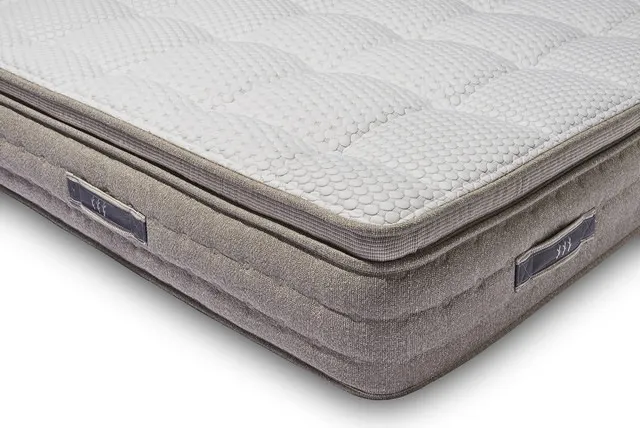
Never drag your mattress by its fabric cover or lift it using sharp tools. The side handles on most mattresses are designed for gentle positioning, not for bearing the full dead weight of the bed. Pulling too hard can tear the stitching. Always use two people to lift and spin the mattress, sliding it gently to avoid damage to the fabric, the frame, or your back.
Mistake #3: Ignoring the Zoned Support System
A small percentage of ergonomic mattresses feature "targeted zoned support." This means the foam or coils are firmer in the lumbar area and softer near the shoulders. If you have a highly specialized zoned mattress, check the manual before rotating. A 180-degree spin usually works, but a 90-degree quarter turn might misalign the ergonomic zones entirely.
The Science Behind the Rotation — Why It Matters
Every time you rotate your mattress, you are fundamentally changing how it interacts with gravity and your body mass. Sleep scientists utilize advanced pressure map visualizations to study this phenomenon. These high-tech maps use color-coded sensors to show exactly where the body exerts the most force on a sleeping surface.
A pressure map of an unrotated, neglected mattress clearly shows dangerous "hot spots" (usually indicated in bright reds and oranges) around the lumbar and sacral regions. Because the materials in these spots have been crushed night after night, they offer zero push-back. Over time, this localized material fatigue leads to:
- Visible sagging in the center of the bed.
- Exacerbated lower back and shoulder pain.
- Disrupted sleep cycles due to tossing and turning to find a comfortable spot.
Rotation mitigates this physical degradation. By allowing your body’s weight to "reset" onto fresh, uncompressed zones every 30 days, you ensure that the mattress can push back evenly against your spine, promoting proper alignment and significantly reducing the risk of chronic morning discomfort.
Final Verdict — Don’t Wait for the Wear to Show
Rotating your mattress should never be viewed as an annoying chore. It is a highly effective, zero-cost preventive maintenance strategy that can realistically extend your mattress’s lifespan by up to 30%. When you consider the price of a high-quality bed today, a few minutes of effort every month translates into hundreds of dollars saved.
More importantly, it is one of the easiest ways to actively protect your physical health. Use the quarter-turn method for square hybrid mattresses, utilize the classic flip-and-rotate for dual-sided models, and strictly adhere to a 30-day spin schedule for your modern memory foam beds. Treat your mattress with the care it deserves, and your spine—along with your sleep quality—will thank you for years to come.